
Performance based works by Adrien Mondot and Claire Bardainne utilize animation practices to create a dynamic relationship between the choreography and projection by associating both living and digital tools as a unified installation. Their works put emphasis on the duality of mediums that play to the audience between the synchronized movements of human and digital forms, establishing a vivacious scene that contextualizes upon the interchangeability of ‘reality and virtuality’ within the boundaries of artistic medium.
Hakanaï presents a dance choreography that is performed alongside the projection of digital animation in the enclosed frame of a cube, where the harmonized movements evoke the illusion of being tangible through the reactiveness between the human gestures and fluidity of digital rendering. The digital animation moves in relationship with the motion of human gestures, this interaction contributes to a heightened expression of the human form that utilizes the flexible qualities of animation for further communication towards an audience.
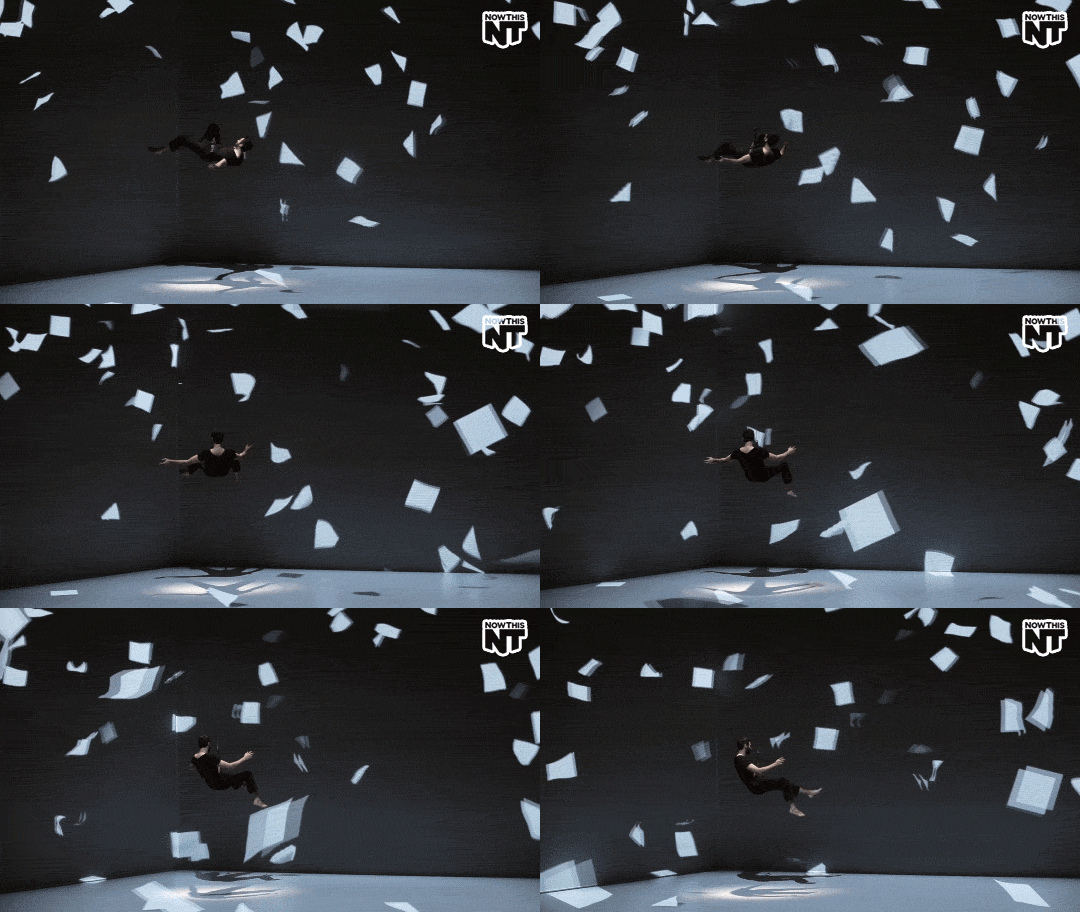
The limitations of digital animation are explored and broadened by Mondot and Bardainne’s inventive use of projection to express the medium in a tangible context. Their technical use of animation creates an immersive environment in which the performers seem to interact with, and the boundaries of virtuality and reality are blurred into a singular coherent display. From performers crashing into waves to falling alongside walls of animated particles, The Movement of Air is also an another exemplary display of this relationship between digital and physical existence. The free play of animation is a powerful medium that contributes for visual communication and expression, and these works serve as an opportunity for artists to utilize and explore the capabilities of animation beyond conventions of a screen.


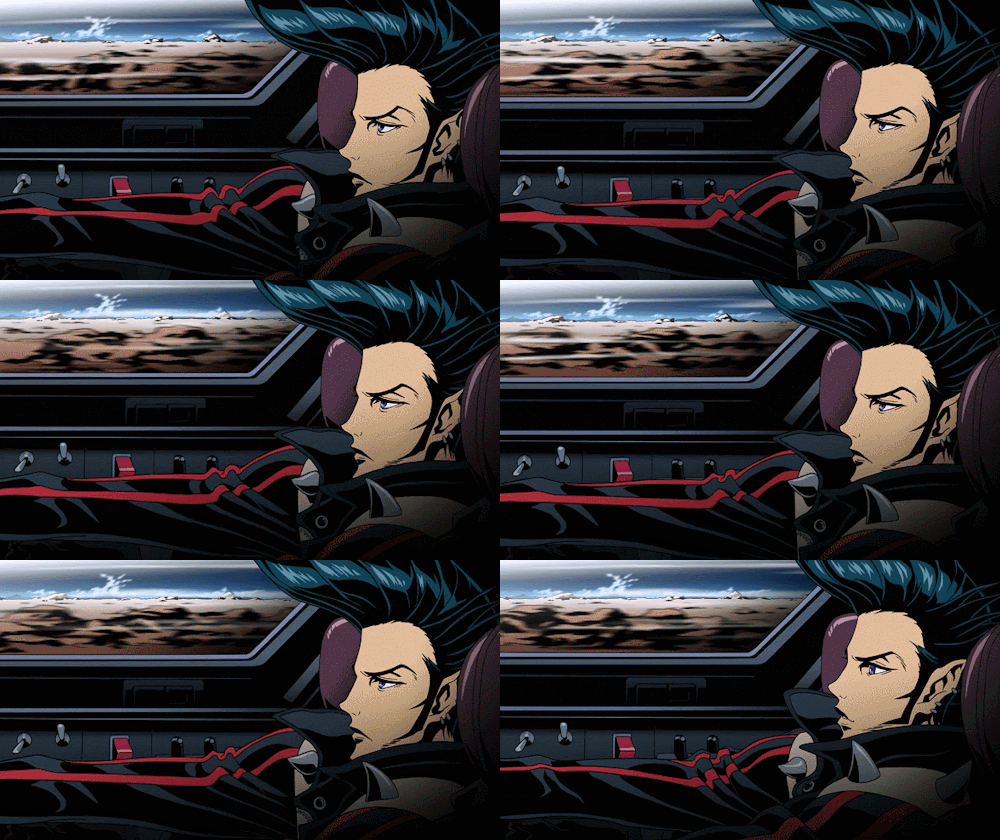
 Interestingly enough, Shinya Ohira has a bit of controversial style as he does not comply with the standard of animation seen so frequently in Japanese animation. It has created a dent within the anime community and has lost Shinya Ohira multiple employment opportunities and was cause for termination during his work with a few big companies. Although this occurred it is obvious that his style has become a sort of standard in many Japanese animated films. His body of works include, FLCL, AKIRA, KILL BILL, GHOST IN THE SHELL 2, ANIMATRIX: Kid’s Story, and The Wind Rises; just to name a few.



 Once
Once


